
 by Hannah
What Do Wasps Eat?
As common as wasps are throughout the UK, many people don’t know much about them, particularly what they eat.
That means that you could be accidentally attracting wasps to your property without realising. If wasps find a reliable food source, they may build nests. Social wasp nests can grow to the size of basketballs, or sometimes larger, and the colony can become aggressive and sting if they feel threatened.
Wasp stings can cause skin irritation, infections and even anaphylactic shock if you’re allergic to them, which is why it pays to keep wasps away and avoid attracting them to your space if possible.
At Flytech Pest Control, we have extensive experience carrying out wasp nest removal across Belfast, Lisburn, Antrim, Newtownards, Bangor, Carrickfergus, Newtownabbey, and throughout Northern Ireland. We also offer bee removal and can deal with hornets, a larger type of wasp.
As such, we have a strong knowledge of wasp behaviour, and can answer common questions about wasp diets and habits.
The Wasp Diet Explained
So, what do wasps eat? The answer depends on the wasp species you’re dealing with. In the UK, there are around 9000 different species of wasps. Most are solitary wasps, meaning they live alone for most of their lives, and they often build small nests underground.
The issues many people face come from social wasps, which live in large colonies with a queen wasp and worker wasps that bring her food.
The most common social wasp species found in the UK are common wasps (Vespula vulgaris), German wasps (Vespula germanica), and European hornets (Vespa crabro). Adult wasps eat only sugars, but their larvae feed on different foods and need protein to grow.
Often, adult wasps will eat exclusively nectar. As well as flower nectar and tree sap, adults consume a sweet liquid that the wasp larvae produce.
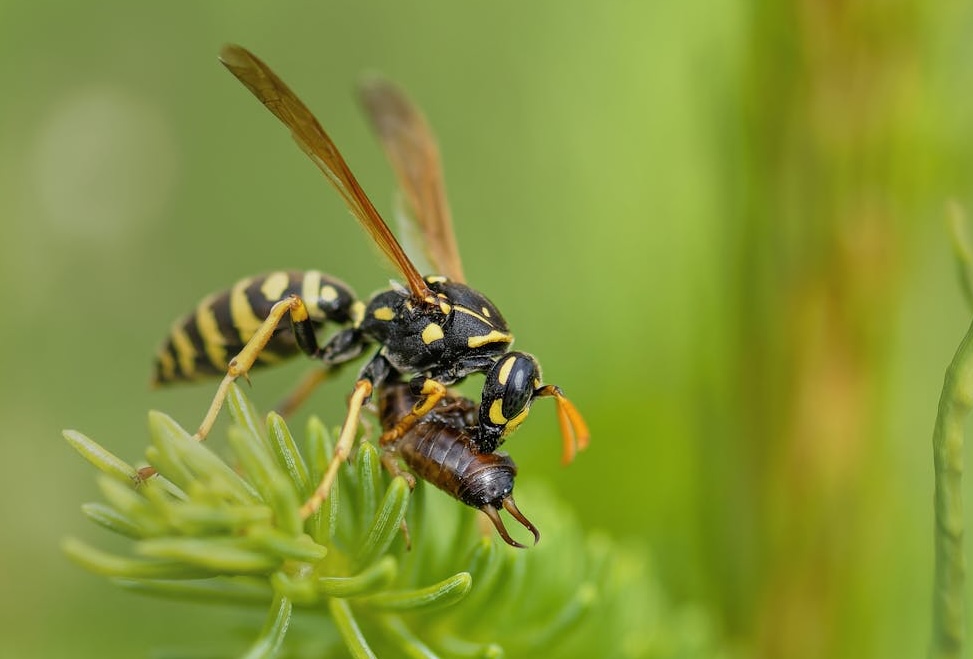
The adult wasps will hunt for insect prey, which varies depending on their species, but often includes aphids, beetles, spiders, flies and other insects. They will feed these insects to the larvae, who will use the protein to pupate and grow into adult wasps.
Some species are known as parasitic wasps, which lay eggs in a host insect, and the larvae then eat the hosts from the inside. These species are found in the UK, but they are not social species and they are not dangerous to humans.
How To Avoid Attracting Wasps
While wasps are natural predators of many garden pests, including aphids, and are a form of natural pest control, they can also be a risk for homes and business premises.
Wasps can be aggressive towards humans and pets if they feel threatened, and social wasps build large nests from chewed wood pulp, which can be unsightly. If wasps build nests inside chimneys or wall cavities, they can cause structural damage, which is why it’s important that you avoid attracting wasps.
If you’re wondering: Am I accidentally attracting wasps? The answer depends on whether or not you leave potential food sources around for wasps. Some simple tips to prevent wasps from building a nest on your property include:
- Keep Your Property Clean: Wasps eat a variety of sugary foods, including human foods, which is cleanliness is important. Clean up spills, particularly sugary liquids like soft drinks, and remove crumbs.
- Protect Bins: Wasps will feed on rubbish, including food waste such as old meat and sugary foods. So, make sure you store your rubbish in sealed bins to stop wasps and other pests from gaining access to them.
- Store Pet Or Bird Food In Sealed Containers: As well as human food, it’s important to protect pet and bird food, by using sealed bird feeders and storing pet food inside sealed containers.
- Use Fruit Netting: Protect fruit trees and berry bushes from wasps and other insects with fruit mesh with very small holes, or store smaller plants in a greenhouse. You should also remove fallen fruit from around fruit trees.
These tips can help reduce the chances of wasps finding a suitable food source in your garden or on your property.
How To Get Rid Of Wasps And Remove Wasp Nests
Now you know what wasps eat, and how to avoid attracting them, it’s important to understand what to do if you find a wasp nest.
Seeing wasps flying around your property isn’t necessarily a sign that it is a nest site. However, if you see many wasps flying to the same area, this could indicate a nest.
If you find a wasp nest, you need to be proactive and call in professional pest control providers like Flytech. Wasp nests shouldn’t be removed by anyone without the experience and protective clothing needed to ensure their safe removal and avoid painful stings.
Wasps only use a nest once, and in the late summer the worker wasps will die off, and the new queen will hibernate in the winter until spring, when she will build a new nest for her colony as she starts the wasp life cycle again. Old wasp nests can be taken over by other insects, and still need to be removed by professionals.
Thankfully, we’re here to carry out wasp treatment and remove wasps, their nests and any other debris. The team at Flytech are RSPH level 2 certified, meaning we have access to wasp nest removal products that aren’t available to the general public. Learn more about how we remove wasps in our guide: How To Get Rid Of Wasps.
Alongside wasps, we can also remove all insect pests including ants, cockroaches, moths, bed bugs and fleas, as well as rodents including rats and mice. For commercial sites, we can also provide ongoing commercial pest control contracts and bird proofing solutions.
So, whatever you need, we can help. Our team provide expert pest control for wasps and other vermin across Belfast, Lisburn and Northern Ireland, so contact us today on 07955 008274 to book a visit from our local wasp nest removal experts.